Your client emails on a Tuesday. “Can you send over last month’s numbers?” It’s 11am. You spend the next 40 minutes pulling data from three platforms, formatting a spreadsheet, building a PDF, and writing an email around it. You hit send. They reply with “Thanks!” and never mention it again.
That’s the monthly PDF report workflow in a nutshell. It costs your team hours every month. It gives clients a frozen snapshot that’s already stale by the time it lands in their inbox. And somehow, agencies keep doing it — because it’s what agencies have always done.
There’s a better way. Give every client their own live dashboard, accessible any time, showing exactly what they care about. The monthly call stops being a “where are my numbers?” interrogation and starts being a conversation about what to do next.
Why the PDF Report Workflow Has to Die
PDF reports feel professional. They’re polished. You spent time on them. But they have a fundamental flaw: they’re dead on arrival.
The moment you export that PDF, the data inside it is stuck in the past. Your client can’t filter it, zoom in on a date range, or compare this month to last. They can’t check it on their own at 9pm when they’re reviewing budgets. And when they have a question — “what happened that week in February?” — they email you.
That email spawns a thread. That thread becomes a Slack message. That Slack message becomes a 20-minute meeting. All because they couldn’t look it up themselves.
Agencies that have moved to live client dashboards report a consistent pattern: clients ask fewer status questions and more strategic ones. When the data is always there, clients stop chasing it. They start trusting it. And they start asking “what should we do with this?” instead of “where is this?”
That’s the shift from account manager to strategic partner — and it starts with a dashboard.
What Clients Actually Want to See
Before building anything, it’s worth being honest about what clients are really asking for. Most clients don’t want a wall of metrics. They want to know three things:
- Is my money being spent well? — Return on ad spend, cost per lead, conversion rate. Whatever maps to their business outcome.
- Is the trend going the right direction? — Not just this month’s numbers, but movement over time.
- What changed? — If something spiked or dropped, they want to understand it without needing to ask you.
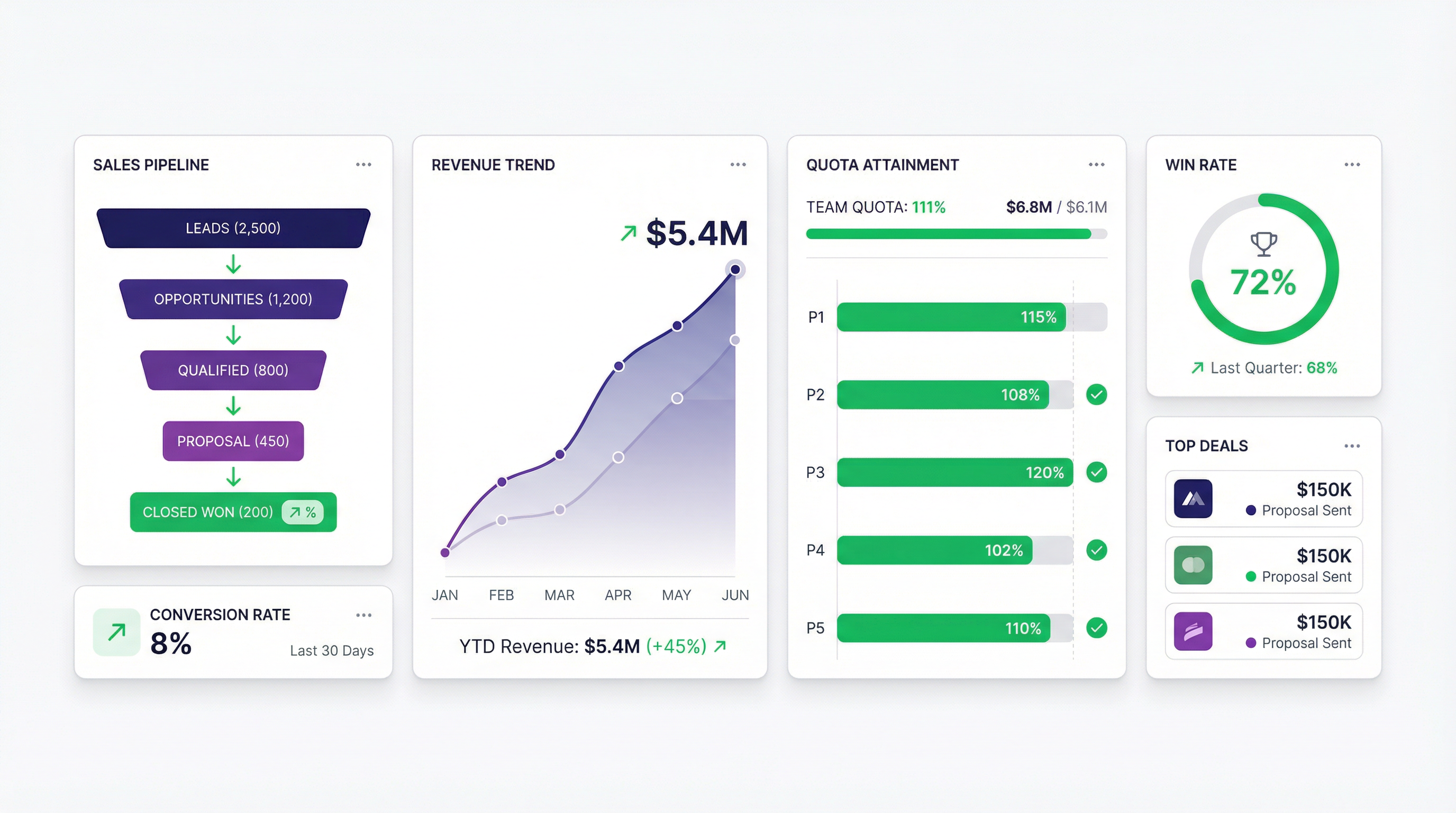
A good agency client dashboard answers all three of these without requiring a call. It shows the headline numbers up front, charts trends over a meaningful time window, and is scoped tightly enough that clients aren’t lost in irrelevant data.
Keep it focused. A dashboard with six key metrics beats one with thirty. The goal is clarity, not comprehensiveness.
What a Good Agency Client Dashboard Actually Looks Like
The best client reporting dashboards share a few structural qualities:
One screen for the headline view. The first thing a client sees when they log in should be the numbers that matter most. No scrolling required to understand if things are going well.
Trend charts with selectable date ranges. Static numbers are fine. Static numbers with “up 12% vs. last month” are better. Numbers that clients can explore across custom date ranges — that’s what builds trust.
Clear labelling without jargon. “CTR” means something to you. To your client’s CEO, it might not. Label things for your audience. “Ad click rate” is clearer than “CTR” for most clients.
Scoped to their account only. This sounds obvious, but it matters. The dashboard should show their data and nothing else — no agency-wide views, no other client names in dropdowns, nothing that reveals how your operation works internally.
Always up to date. If the dashboard still shows last week’s data, clients lose confidence in it fast. Live data connections — the kind that update automatically when the source changes — are essential for anything performance-focused.
How to Build One Per Client
The traditional approach to client dashboards was painful: build a custom solution in Looker or Google Data Studio, maintain data pipeline connections, and rebuild from scratch for each new client with different data structures.
The new approach is faster. Here’s how to set up a per-client dashboard workflow that scales:
Step 1: Standardise your data exports. Pick the format clients will send you, or that you’ll pull from their platforms. CSV from Google Ads. A Google Sheet connected to their analytics tool. Excel files from their CRM. Whatever it is, make it consistent so your setup time per client drops.
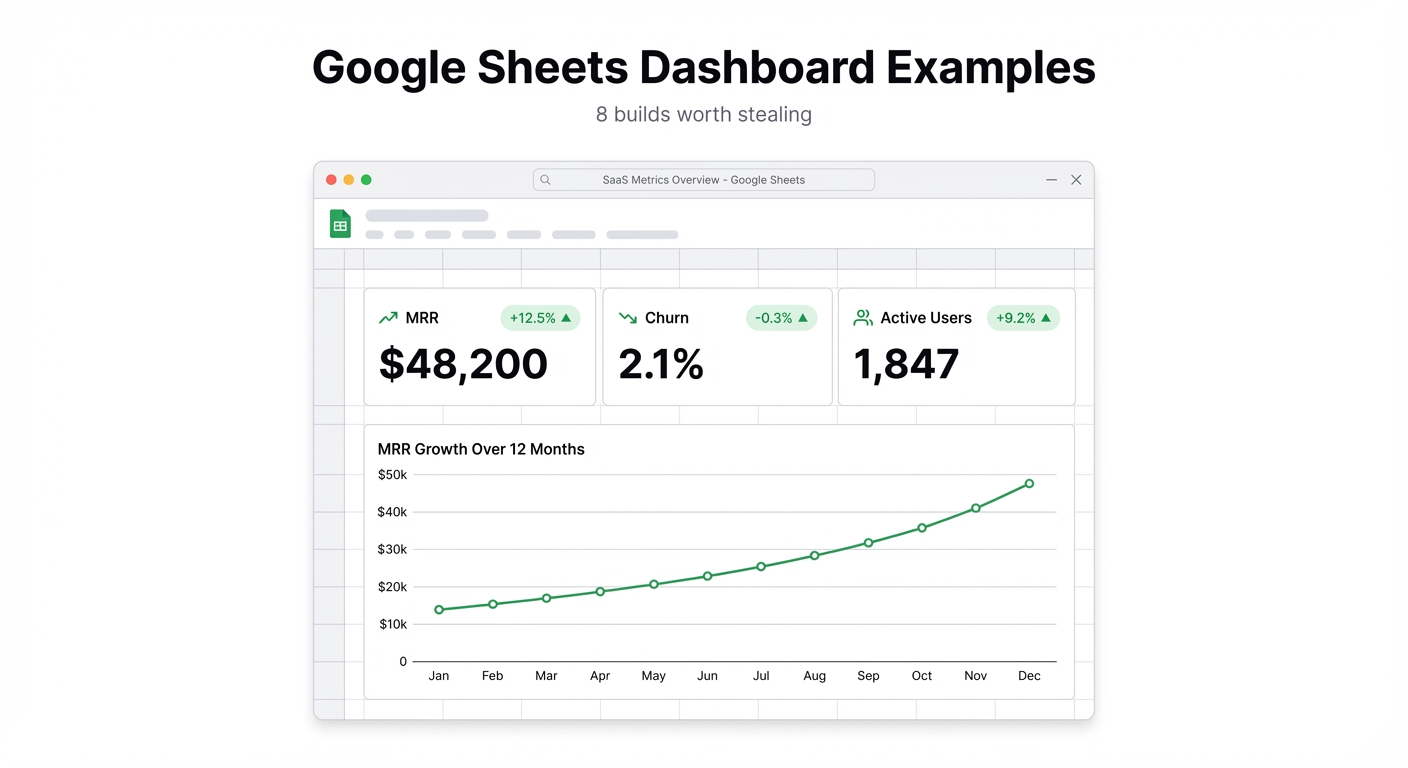
Step 2: Connect the live data source. If the client has a Google Sheet pulling their ad data, connect it directly. If they’re using Excel Online, connect that. The moment you connect a live source, the dashboard updates automatically when the underlying data changes. No manual exports, no re-uploads.
Step 3: Describe the dashboard you want. With Infograph, this is the part that surprises people. You describe what you want — “show me monthly ROAS by campaign, with a trend line and a table breaking down spend vs. conversions” — and the AI builds it. Adjust from there. Add a chart, rename a metric, change the date filter. Most client dashboards come together in under 10 minutes once the data is connected.
Step 4: Set up per-client sharing. This is where the agency workflow really pays off. Each client gets their own password-protected dashboard link. They log in with a password you set. They see their data. They can’t see anyone else’s. They bookmark it and check it whenever they want — Tuesday at 11am, Sunday night before a board meeting, right before they’re about to call you.
How Infograph Fits This Workflow
Infograph was built exactly for this kind of use case.
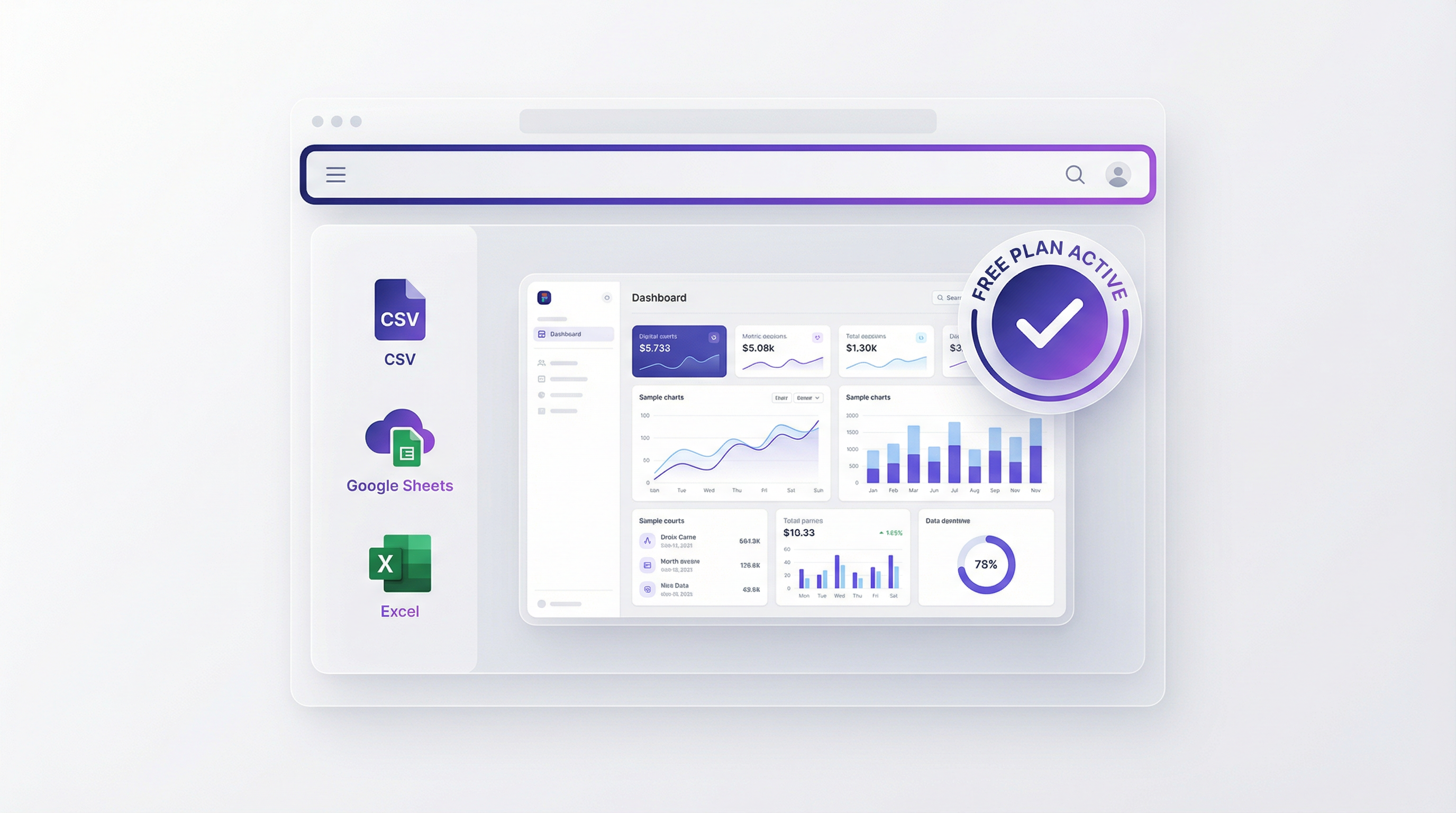
You upload the client’s data — CSV, TSV, JSON, Excel, or connect their Google Sheets or Excel Online account directly. You describe the dashboard in plain language. The AI builds it. Then you publish it behind a password that only your client knows.
The password-protected sharing is the critical piece for agencies. Each client dashboard gets its own URL and its own password. Clients don’t create accounts. They don’t log into your system. They just go to a link, enter a password, and see their data. Clean, private, professional.
For agencies managing multiple clients, the Teams plan ($49.99/mo) gives you 10 connections and 3 seats — enough for a small agency team to manage a portfolio of client dashboards from a single workspace. Need more dashboards? Add-ons are $1.99 per extra dashboard per month.
The economics make sense. Compare the cost of Infograph to the hourly rate you’re billing for the time your team spends building PDFs every month. The switch pays for itself inside the first client report cycle.
The workflow in practice:
- Connect client’s Google Sheet or upload their data export
- Describe the dashboard: “Show ROAS, spend, leads, and cost per lead by month with campaign-level breakdown”
- AI builds it in seconds — adjust as needed
- Set a password and share the link with the client
- Next month, the data updates automatically — no rebuild required
That’s it. The client logs in when they want. You stop getting Tuesday 11am emails asking for last month’s numbers.
Making It Part of Your Agency’s Standard Offering
The agencies winning on retention right now are the ones making clients feel informed without requiring a call for every update. A live client dashboard is the mechanism for that.
Package it as part of onboarding. “We set up a private dashboard for you on day one” is a selling point, not a technical detail. It signals that you operate transparently, that you’re confident in your results, and that you respect your clients’ time.
When the dashboard is always there, clients stop worrying about whether you’re hiding something. The relationship shifts. The monthly call — if you still have one — becomes about strategy and next steps instead of status updates you’ve already sent.
Start With One Client
Pick your most data-forward client. Connect their data source to Infograph, build their dashboard, and send them the password-protected link. See how they respond.
Most agency teams that try this don’t go back. The PDF workflow feels absurd once you’ve watched a client say “I checked the dashboard this morning, I’m already caught up” at the start of a monthly call.
Free tier gets you one dashboard — no credit card needed. Build the first one and see for yourself.